| 9 mins read
SUMMARY:
- Although women have made considerable progress in American electoral politics, resistance to female candidates is hard wired into the institutions of candidate selection and the primary system.
- Research shows that women candidates faced heightened scrutiny of every aspect of themselves and must overcome a higher bar for competence than their male competitors.
- A Democratic woman candidate does not necessarily boost the party's appeal among women voters. Voters tend to perceive women candidates as more liberal. This could disadvantage a Democratic woman.
- It is very likely that the winning candidate in 2028 will be a man, but if a woman were to win she would need to be an extraordinary candidate, perhaps an NRA backed Republican woman who slid past backbiting men.
At a moment when the previously unthinkable has become common place, we consider why what ought to be commonplace is not. Although women have made considerable progress in American electoral politics, they have yet to capture the White House, only one has been vice president and only two have been the nominee of one of the two major political parties. In a much publicised intervention Michelle Obama, often trailed as a potential candidate, said that the US was not grown up enough for a woman president. She was referring to the widespread sexism and resistance encountered by women with political ambitions.
Arguably that resistance is everywhere, but perhaps greater in the US than in other democracies. The resistance to women is hard wired into the institutions of candidate selection, mainly political parties that were designed to nominate specific types of men. Every feature of the normal biases is amplified by the American primary system which is characterised by grotesquely high cost, very demanding time requirements, particular localisms, and small selectorates.
Research shows that as historic outsiders women candidates faced heightened scrutiny of their appearance, their personalities, their qualifications and must overcome a higher bar for competence than their male competitors. They are expected to balance traditional femininity with political authority, to embody domestic roles while projecting strength. Furthermore, the political environment is increasingly toxic as a growing and powerful misogynistic political movement has taken hold in the United States where polling shows a resurgence of reactionary gender ideas, especially among young men.
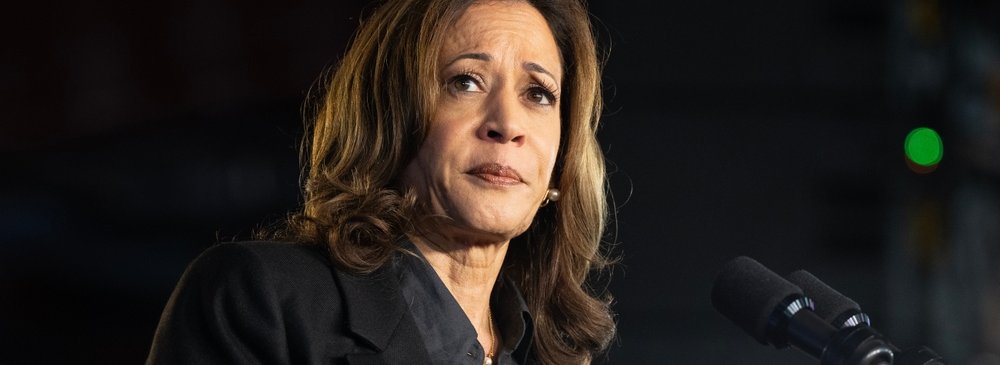
Not enough women voted for Kamala Harris
Looking closely at the 2024 presidential election we can see why the chances of a woman president are so slim. Despite a persistent gender gap in voting since 1980 (women favouring Democrats) and a 2018 Pew survey indicating American desire for more women leaders, the 2024 election—anticipated as a "gender election" with Kamala Harris as the Democratic candidate and reproductive rights a key issue—did not deliver a woman president. The gender gap, while present (women more likely to vote for Harris), was no more profound than in previous elections, with Trump's perceived economic competence impacting the outcome, and Harris's association with an unpopular Biden weighing on her campaign. Data from the Rutger’s Centre for American Women and Politics showed Harris's lead among women was only 6-8 percentage points, compared to Biden's 12-15 points in 2020. The magnified gender gap among Generation Z, expected during the campaign, did not materialize. Ultimately, the disproportionate support of women voters for a Democratic woman candidate proved insufficient to secure the presidency, suggesting that a Democratic woman candidate does not necessarily boost the party's appeal among women voters, although nor does it provoke a male voter backlash.
Democrats show a greater inclination to support women candidates than Republicans, who are often gender-neutral or slightly biased against them. The "gender heuristic hypothesis" suggests voters tend to perceive women candidates as more liberal. This could disadvantage a Democratic woman, making her appear too left-wing for swing voters. However, it could potentially benefit a Republican woman by making her seem more moderate, thus attracting centre-left swing voters. This leads to the provocative assertion, echoed by Bill Clinton and other commentators, that the first woman president would most likely be a Republican.
Will The US Ever Elect a Woman President?
In such circumstances how might it be possible to elect a woman president. We have devised four scenarios.
- The standard route: Winning through nomination and election (never happened).
- The actual dead body scenario: Elected as VP, succeeding the president upon death or resignation, and then winning re-election (most likely, but still unlikely). Harris's 2024 bid, though not a win, came closest to this path.
- The political dead body scenario: A party, unable to unite behind a male candidate, nominates and elects a woman (common in parliamentary systems like the UK, faint possibility in the US).
- The backlash route: Public resistance to the erosion of women's rights coalescing behind a woman candidate (remote possibility, hoped for by Democrats in 2024).
These scenarios highlight the persistent barriers. There are differences by party. Democrats, with a more secular and diverse base, face competing pressures between demands for gender and racial diversity, potentially alienating core working-class constituencies. A woman candidate must balance progressive expectations with the need for moderate platforms, while navigating intense scrutiny and resistance to her feminism at the same time as appealing to diverse male voters. Conversely, Republicans are less supportive of women leaders, and religious credentials and conservative values are paramount. While some fundamentalist groups oppose women in authority, others, particularly through private religious schooling and donor networks, provide support. A successful Republican woman would likely be a middle-aged, white, upper-middle-class, college-educated mother with an authentic religious background, professional success, strong party activism, she might have the sponsorship of the NRA and she would almost certainly own a gun and be able to use it.
Most systems contain elements of the same barriers but the UK, despite its slow political evolution and similar electoral system to the US, has had three Conservative women (Thatcher, May, Truss). They succeeded via the "political dead body" scenario—stepping over competing male candidates. None were initial favourites; their rise was often due to infighting among frontrunning men. But they benefited from strict internal party selection processes and good timing. Their success was unlikely, a product of a malfunctioning opportunity structure in which it was possible to exploit disarray among male contenders in a right-wing party. Whilst not reliable this is a route to power.
As we write, in in the summer of 2025, the only additional scenario might be some kind of dynastic succession via the Trump family… Even so, we predict that the overwhelming likelihood is that the successful candidate in the 2028 elections will be a man. For a woman to be elected, an astonishing convergence of events will need to have taken place to enable her to step through the hurdles and over the men in her way. If she is a Republican, she will have simultaneously defied and embraced gender stereotypes and navigated a political terrain in which gender norms have become increasingly visibly salient at the same time as she minimises their import. If she is a Democrat she will have pulled together an electoral coalition that was not ready to support a woman in 2016 or 2020. We think it is extremely unlikely, but then so were the premierships of Thatcher, May and Truss.
Digested read by Rosie Campbell and Joni Lovenduski, with editorial support from Anya Pearson.
Need help using Wiley? Click here for help using Wiley