| 9 mins read
SUMMARY
- A striking feature of Rachel Reeves’s recent budget was the frequency with which she name-checked (or, more precisely, constituency-checked) backbench Labour MPs.
- But the idea that MPs are in touch with the real world through their constituency offices is ill-founded.
- Listening to MPs is not a substitute for good policy advice, especially because MPs tend to be biased and may seek a solution that is quick and easy to explain instead of well worked-out policy.
- The Labour government needs to be bolder and braver—and this probably means listening less to its MPs.
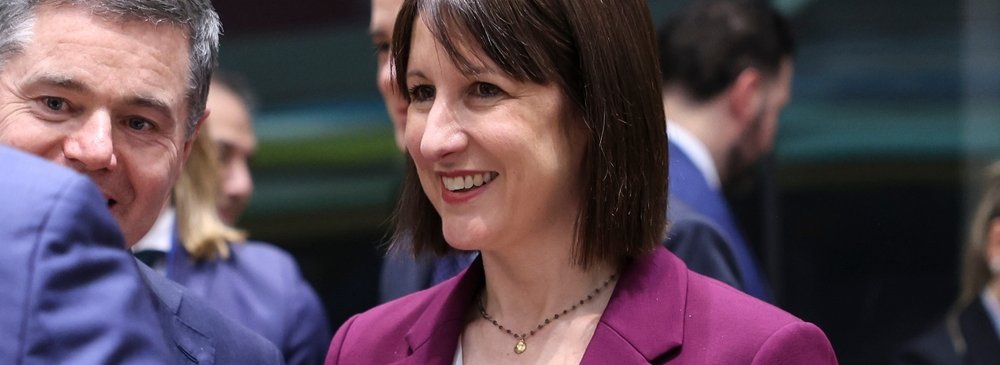
A striking feature of Rachel Reeves’s recent budget was the frequency with which she name-checked (or, more precisely, constituency-checked) backbench Labour MPs. ‘Thanks to representations’ or ‘having heard’ from her honourable friends the members across the country, from Barnsley to Wolverhampton, Camborne to Whitehaven, the chancellor diligently allocated £5m for a worthy cause here and £10m there.
My curiosity piqued. I did a quick review to find out whether all recent budgets have been like this. The 2024 budget featured constituency-checking on schools affected by reinforced autoclaved aerated concrete (RAAC), along with a nod to a couple of Welsh MPs on making coal tips safe, but only five constituencies got the treatment compared with twenty in 2025. Venturing back into the years of successive Conservative governments, backbench MPs from Scotland regularly earned mentions for their representations on behalf of the whisky industry, while English MPs were acknowledged for their backing of the great British pub. Sometimes, there was a teasing quality, particularly in George Osborne’s budgets, with the same MPs repeatedly mentioned. The member for Harlow East was apparently relentless on the subject of fuel duties, while his colleague from Northampton North was the man for potholes. Osborne seems to have started the practice and generally clocked up between four and eight mentions once he got into his stride. Hammond, Javid and Sunak were not particularly active. In 2022, Kwasi Kwarteng was too busy fomenting a fiscal revolution to acknowledge backbenchers’ campaigns. Undoing Kwarteng’s efforts crowded out the backbenchers in Jeremy Hunt’s response and he never became a big name-checker. Perhaps most notably, neither Gordon Brown nor Alastair Darling went in for the practice, so Reeves is ploughing a new furrow for a Labour chancellor.
Some of this is just about acknowledging an MP’s hard work and devotion to a worthy cause, but this government seems to be taking listening to its MPs a lot further than that. Is this a good thing? Certainly, it seems better to listen ahead of the policy announcement rather than being forced into a reversal, as has happened all too frequently lately. It also seems better than the other listening technique practised before the budget, of flying a policy kite—notably the possibility of raising income tax—and assessing the reaction. Even a pre-emptive policy reversal, withdrawing the measure before it is launched, is still a reversal. It gives the impression of a government that cannot make up its mind.
Evidently, the government needs better information about the impact of its policies. Too often, it seems to have been taken by surprise when it turns out that a measure has an influential group of losers. Either ministers are not reading their briefing papers or the civil service is not doing its job (which includes running consultations). There’s mounting evidence that the Rolls Royce service is now more of a rusty Austin Allegro—and that is difficult for the government. However, listening to MPs is not a substitute for good policy advice.
Received wisdom in political science is that political parties in a democracy have an important role in bridging the tasks of representation and governing, conveying information about collective preferences and providing a structure in which popular demands can be turned into workable policy proposals. But this role is not fulfilled by MPs acting as representatives of singular constituencies. MPs might participate in party policy-making structures, but, in making representations to the chancellor, they are doing something else. Sometimes, they take up neglected national causes; sometimes, they promote policies derived from what they perceive to be the interests and concerns of their constituents. In the former role, they are acting in a way which is socially valuable, but not particularly representative. In the latter, they are representative, but not in ways conducive to bridging the tasks of representation and governing.
This is for several reasons, to do with how MPs hear and select constituency voices and how they articulate proposals and demands. The idea that MPs are in touch with the real world through their constituency offices has been turned into an article of political faith, but it is ill-founded. It is obvious that there will be significant biases in the voices heard by MPs as they rely on those who are active in speaking up and eschew any systematic attempt to assess public views of policies in their constituencies. Their tendency to claim special access through what they hear ‘on the doorstep’ is heightened by the myths that surround the territorial nature of constituency representation. Supposedly, the territory is a ‘community’ whose residents have common interests, a claim which is vulnerable to manipulation by astute organisers and communicators. The idea of a ‘rural community’ is particularly susceptible, with effective organisation by farming interests ensuring that they are accorded a special status.
Turning to the mode of articulation, we find that MPs’ preferred policy instrument is a sticking plaster. Any well worked-out policy will have losers as well as winners, but MPs are not up for the challenge of putting across the big picture when they face angry and noisy constituents, as Steve Richards pointed out in a stringent critique of their performance on Brexit. They need something quick and easy to explain. There is also a pronounced status quo bias as the recent examples of removing the farm inheritance tax exemption and ending Covid-era business rate relief in hospitality demonstrate.
None of this is to deny that good work is done in constituencies by dedicated MPs. But it does raise questions about whether we should heap quite so much praise on the ‘good constituency MP’. Quite a lot of their work could be prevented by government agencies performing properly in the first place. Some of it should really be done by other bodies: localism and devolution are undermined by a channel which escalates local issues to central government, often bypassing local government in the process.
In the budget, the chancellor sought to portray herself as listening, hearing and responding (with thanks). This echoes a recurring theme of recent months, with advice coming to the government from all directions that it needs to listen more. Yet the budget illustrates in a microcosm the hazards of this strategy. True, it was not a disaster, but it sorely lacked any sense that the government was seizing the opportunities of office to address the country’s accumulated problems. MPs may have good ideas, but they are small ones—and their main impact is liable to be small-c conservative, avoiding policy changes which will stir up opposition. This fear of criticism seemed to infect the chancellor: even the biggish decision to impose a High Value Council Tax Surcharge (AKA the ‘mansion tax’) was presented as a small decision, as fewer than 1 per cent of properties will be affected. This government needs to be bolder and braver—and this probably means listening less to its MPs.