
| 9 mins read
SUMMARY
- Labour faces credible electoral threats from minor parties to its left with challenges in some of its safest seats.
- The Greens pose a threat in English cities, Your Party and Muslim independents are competitive in constituencies with sizeable Muslim populations.
- Nevertheless, a major collapse for Labour would happen only if these parties and their potential voters were prepared to split the left-wing vote in more marginal constituencies, potentially handing power to the right at the next election.
- The minor parties and independents might need to coordinate to maximise their respective performances, possibly through an electoral pact.
Labour’s landslide victory in the 2024 general election deflected attention away from signs that it had lost support among some of its core voters. Muslims were alienated by its stance on the Israel-Hamas war in Gaza. Left-wingers who had supported Jeremy Corbyn’s leadership were opposed to Keir Starmer’s changes. Labour lost five safe seats to independent candidates, four of whom mobilised Muslims over the Gaza war. The Greens also increased their representation to four seats.
A minor-party surge could split the left-wing vote in half
Plurality-rule voting usually incentivises voters to support the two major parties and shun smaller parties to avoid ‘wasting’ their votes. This is evident where the major-party contest is close, i.e. marginal constituencies.
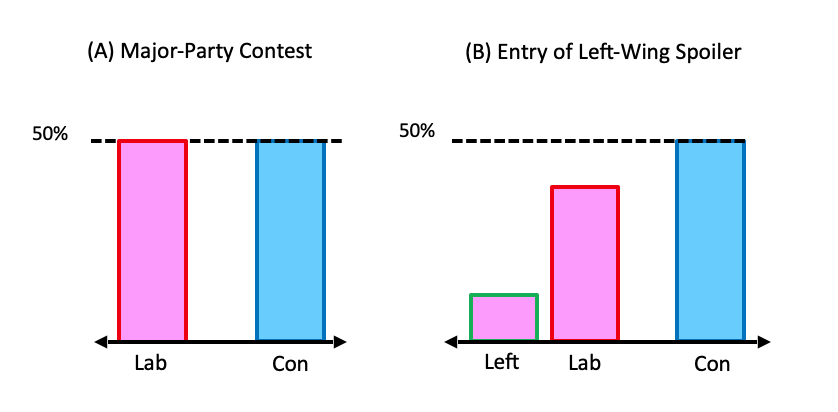
Figure 1: Electoral Context in Major-Party Marginal Constituencies
Figure 1A shows a close major-party battle in a marginal seat, with Labour and the Conservatives each at 50%. If a radical-left party emerged, it might detach some support from Labour (small pink block in Figure 1B) but none from the ideologically distant Conservatives. The left-wing party would be unable to win these seats and would be an anti-Labour ‘spoiler’, costing it seats to the Conservatives.
Not all constituencies are tight battles. Each major party has many ‘safe’ constituencies, where the distribution of voter preferences is either concentrated on the left (safe Labour) or right (safe Conservative). Figure 2A shows a safe Labour seat, where Labour wins 70% of the vote to the Conservatives’ 30%. Paradoxically, these constituencies may be more vulnerable to a minor party because the logic of ‘wasted votes’ applies less there. If a left-wing party detached votes from Labour, it would not necessarily hand the seat to the Conservatives. A minor-party surge could see it split the left-wing vote in half (Figure 2B).
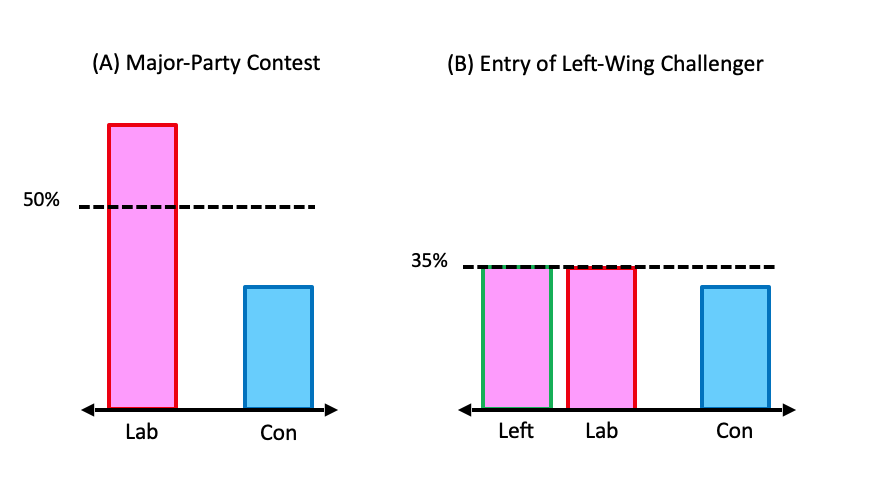
Figure 2: Electoral Context in Left-Leaning Constituencies
Left-Wing Challengers to Labour in the 2024 Election
The Greens have become a repository for left-wing protest votes (all subsequent references are to the English and Welsh party). They won four seats in 2024, an increase of three. Of these, two were previously safe Conservative rural seats. The third was a safe Labour seat in Bristol (Table 1). The latter was a straightforward supplanting of Labour from the left. In North Herefordshire and Waveney Valley, the right-wing vote fragmented, and the Greens combined left-leaning tactical votes with ex-Conservative protest votes, mimicking the LibDems’ strategy.

Table 1: Green Party Seats (2024). Note: Votes for other parties/candidates excluded.
The Greens were runners-up in 40 constituencies, 39 won by Labour (Table 2). These could be targeted in a left-wing surge (Figure 2B). There were another 45 Labour seats where the Greens won over 10% while finishing third or lower (Table 3). They performed well in university towns and cities, especially London.
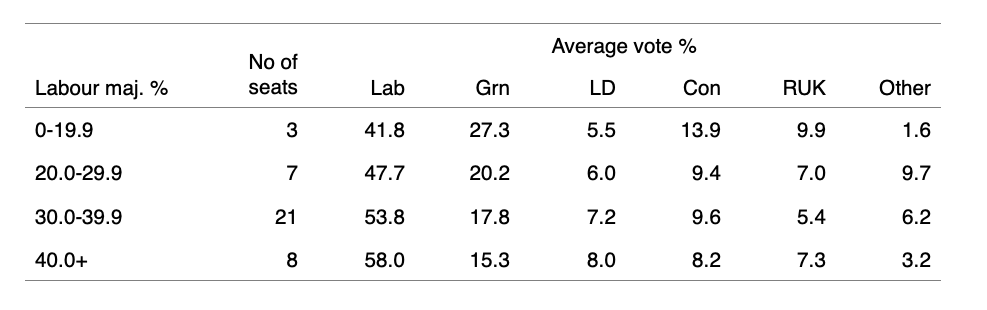
Table 2: Green Party Second-Place Finishes to Labour (2024)
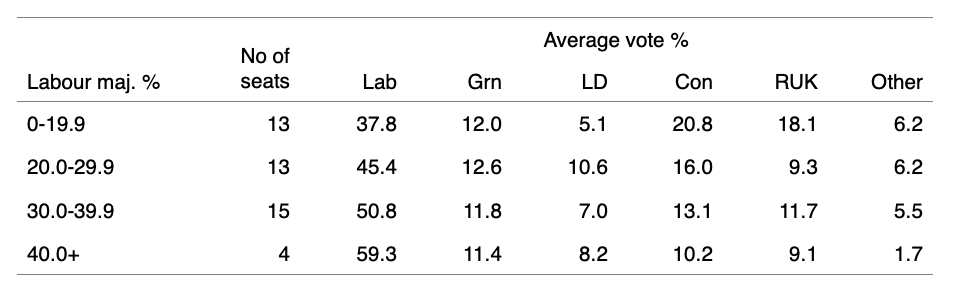
Table 3: Green Party Outside Top Two in Labour Seats and over 10% of Vote (2024)
Labour suffered major swings to independents and candidates for George Galloway’s Workers Party of Britain (WPB) in constituencies with large Muslim populations, principally over the Gaza war (Table 4). Labour also lost to Corbyn, who ran as an independent in his Islington North constituency. Independents or the WPB came second to Labour in 17 constituencies (Table 5). These included the seats of the health secretary, Wes Streeting, the home-office minister, Jess Phillips and the home secretary, Shabana Mahmood.
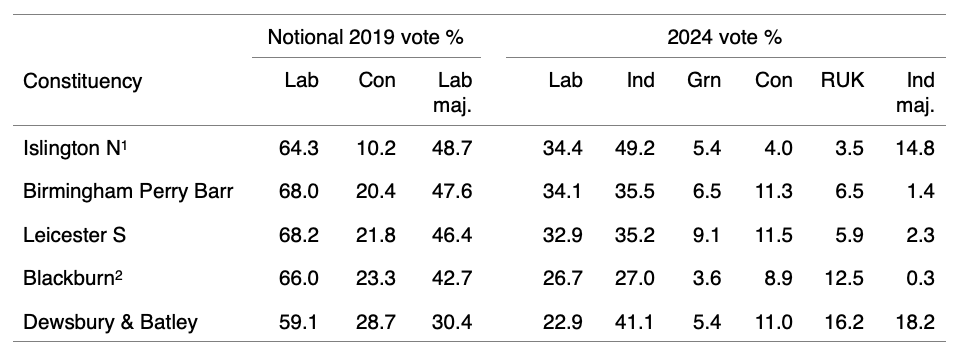
Table 4: Independent Gains from Labour (2024). Notes: Other parties/candidates excluded. ‘Ind’ includes votes for winning candidate only. 1. Liberal Democrats second in 2019 with notional 15.6%. 2. A separate WPB candidate won 18.3% in 2024.
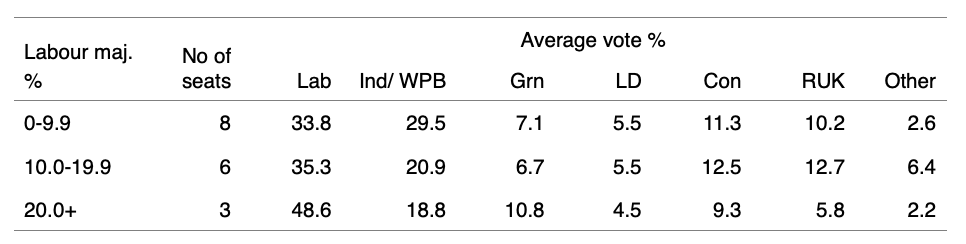
Table 5: Independent/WPB Second-Place Finishes to Labour (2024). Note: ‘Ind/WPB’ includes votes for runner-up only.
How Serious is the Left-wing Threat to Labour?
With Labour now in government and confronted with the task of managing Britain’s economic and social problems, its difficult decisions could cost it electoral support. The Greens look well placed to profit. In September 2025, they elected Zack Polanski, an ‘eco-populist’, as their leader. Polanski declared that he wanted to build a ‘green left’ and his message to Labour was: ‘We are here to replace you.’ Beyond their current seats, the Greens’ best prospects are in the 39 constituencies where they were runners-up to Labour. The Labour-to-Green shift among voters would need to be substantial, however: only three of these seats would fall on a 10-point swing.
The Gorton and Denton by-election provided an opportunity for the Greens. Labour was defending a 37-point majority in a constituency where the Greens finished third in 2024. In a three-way fight, the Greens snatched their first ever by-election victory. The contest demonstrated the left-right pincer threat to Labour, with young voters and Muslims shifting to the Greens, and older white working-class voters to Reform. The Greens’ victory confounded the argument that voting for them would let in Reform by splitting the left-wing vote.
A second potential challenge to Labour comes from the independents who won seats in 2024. Along with Zarah Sultana, a defecting Labour MP, they announced a new force, Your Party, in 2025. The party was beset by internal divisions and two MPs quit before its founding conference. Radical-left activists were highly visible at the chaotic gathering, the Muslim interest represented by the ‘Gaza independents’ less so. The party’s prospects looked uncertain in the wake of its difficult founding.
A danger for the Greens, Your Party, the WPB and independents is that they could split the anti-Labour left-wing vote in target constituencies. One solution would be to arrange electoral pacts, agreeing to stand only one left-wing candidate. Parties differ, however, in their assessments of which constituencies they should be allocated.
As well as seats where the ‘red-greens’ were runners-up, Labour could be seriously imperilled if their rivals adopted a ‘spoiler’ strategy. There are 85 Labour-held seats with majorities over the Conservatives of less than 10 points and another 71 seats where the majority is 10.0-19.9 points (Table 6). Most marginals would fall with a modest Labour-to-Conservative swing. Alternatively, a 5-point Labour-to-Green swing would by itself flip 43 Labour seats Conservative. In the 89 Labour seats where Reform finished second, a 10-point Labour-to-Reform swing would deliver 30 to Reform; combining this with a 5-point Labour-to-Green swing would deliver another 26 to Reform.
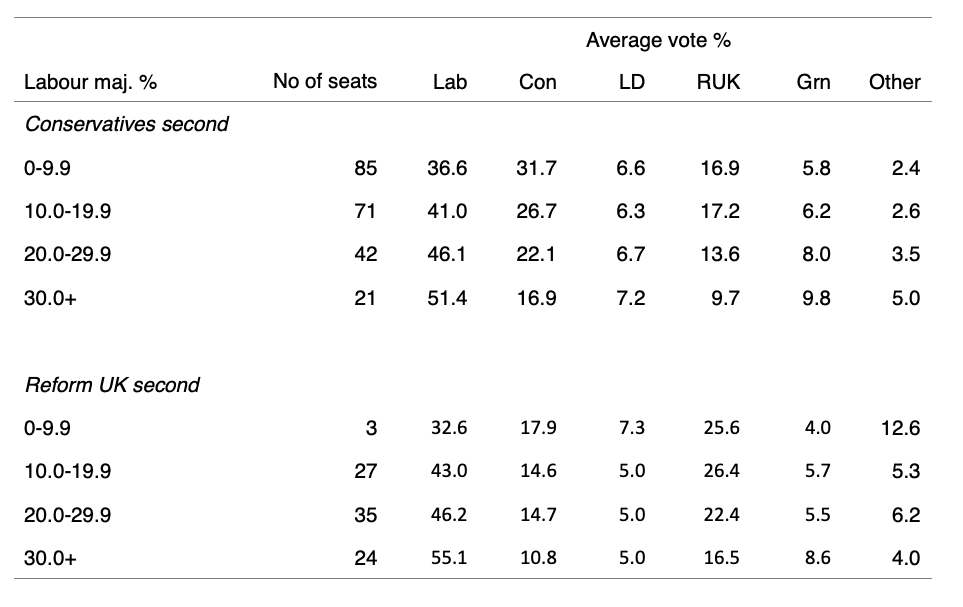
Table 6: Labour Seats with Conservatives or Reform UK in Second Place (2024)
At this point, Labour might seek solace. If there were a genuine chance of the right – particularly Reform – replacing Labour in government, the calculation for left-wing voters would change. If pro-Labour tactical voting is needed to defeat the right in marginal seats, it might appeal to leftist voters. But in left-leaning constituencies where the right posed no threat, Labour could face a strong red-green challenge.
Need help using Wiley? Click here for help using Wiley


