| 8 mins read
SUMMARY
- The British Government’s trials and inquests into historical abuses by the Army in Northern Ireland are narrowly focused on individuals and exceptional incidents and ignore the everyday violence of colonialism.
- Between 1969 and the peace deal in 1998, British soldiers killed 300 people (152 of whom were civilians) and 502 soldiers were killed. There was also a catalogue of other abuses.
- The Conservatives passed the Northern Ireland Troubles (Legacy and Reconciliation) Act in 2023. This prevented any prosecutions for Troubles related crimes. It was rejected by victims and survivors. It is quietly being repealed by the Labour government.
- An alternative approach to the Act would be a more transformative conception of historical justice.
The British Government has confronted historical abuses by the Army in Northern Ireland during the Troubles through a ‘juridical approach’. This approach holds a small handful of individual soldiers to account through the legal system whilst refusing to scrutinise the collective responsibility of the political system and the Army as a whole. The Army’s crimes are reduced to a handful of unlawful killings that are presented as the exception rather than the extreme end point of a spectrum of colonial violence.
Various voices at Westminster have called for the people of Northern Ireland to accept the findings of trials and move on. They warn that dwelling on the past causes more harm than healing, reopens old wounds and hinders reconciliation. But trials and inquests are so narrowly focused on individuals and exceptional incidents that they ignore the everyday violence of colonialism, allowing Britain to rehabilitate its legacy in the region.
The Army During the Troubles
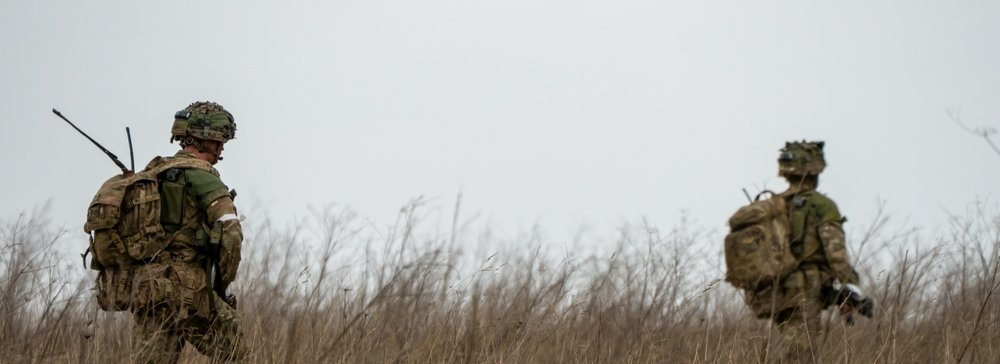
More than 300,000 soldiers served in Northern Ireland, reaching a peak in the 1970s of over 20,000 at any one time. Looking at the full range of crimes and abuses by the Army during the Troubles reminds us that colonial violence is suffusive as well as explosive.
Extensive collusion occurred between soldiers, the Royal Ulster Constabulary and loyalist paramilitaries. Soldiers were regularly accused of planting evidence and found guilty in some high-profile cases. The Army set up checkpoints where and whenever it wished and used these to harass nationalist populations. It blew up roads to limit border crossings and British soldiers frequently crossed illegally into Ireland. Armed observation posts were set up in the heart of nationalist communities. It undertook searches of individuals and houses on a daily basis. Curfews were imposed, as were restrictions on entering town centres. All of this was enabled by emergency powers that significantly curtailed human rights protections.
And, of course, there were the killings. Between 1969 and the peace deal in 1998, British soldiers killed 300 people (255 of whom were Catholic; 152 of whom were civilians) while 502 soldiers were killed.
The Limits to Historical Justice
While some soldiers were tried during the Troubles, after the 1998 Belfast Peace Agreement, discussions turned to transitional justice and the Army came under scrutiny alongside paramilitaries. To date, six soldiers covering five incidents have been charged with historical crimes while up to another 50 were reportedly facing potential charges. Only two of those have gone to a full trial (David Holden who received a three year suspended sentence in 2022 for the manslaughter of Aidan McAnespie; and Soldier F in 2025 who was found not guilty on two charges of murder and five charges of attempted murder), while two soldiers died during or before their trials and another trial collapsed after the judge ruled certain historical evidence was inadmissible.
It was against the backdrop of looming trials that in 2019 Karen Bradley, the Conservative Secretary of State for Northern Ireland, infamously declared that ‘over 90 percent of the killings during the Troubles were at the hands of terrorists. Every single one of those was a crime. The under ten percent that were at the hands of the military and police were not crimes; they were people acting under orders and instructions, fulfilling their duties in a dignified and appropriate way’.
Boris Johnson and Rishi Sunak turned this claim into a prophecy by passing the Northern Ireland Troubles (Legacy and Reconciliation) Act in 2023. This prevented any prosecutions for Troubles related crimes (granting amnesties to soldiers and paramilitaries) and, in return, established the Independent Commission for Reconciliation and Information Recovery. On the surface a tool for information recovery was highly appealing but, in reality, the Act was primarily an amnesty for soldiers and rejected by victims and survivors.
The Politics of Forgetting
Another way of seeing Britain’s juridical approach is as a quest to shape the collective memory of the past. With trials, collective state violence fades from scrutiny. The past is no longer seen holistically, but instead it becomes a series of decontextualised and individualised events. Inquiries and investigations too, like the Bloody Sunday Inquiry and Operation Kenova, were about individual accountability and the actions of a ‘few bad apples’, not collective political responsibility. From this perspective, trials and inquiries reveal the long legacies of imperial power.
What is at stake is a meta-conflict, or a conflict over the causes of the conflict. If historical justice mechanisms exculpate the Army as a whole but find a limited number of egregious acts by a very small minority of individual soldiers, it allows the British to write a narrative of the Army. One where the Army is neutrally upholding democracy against an onslaught of IRA terrorism. Alternatively, if this narrative is challenged, it could mean that the Army is seen as a colonial aggressor that suppressed the rights of a minority. And thus it gets to the core of the legitimacy of the British Army.
An alternative approach?
The Northern Ireland Troubles (Legacy and Reconciliation) Act of 2023 is quietly being repealed by Starmer’s Labour government. As such, it is worth thinking about what an alternative model for dealing with historical abuses by the Army in Northern Ireland might look like.
An alternative approach would be for the British government to adopt a more transformative conception of historical justice. Transformative justice looks not just at individual events but also acknowledges the structures and collective circumstances that led to those events in the first place.
This would entail rethinking historical accountability so that it places victims at the centre, not veterans (whilst acknowledging that veterans may fall into this latter category too). It is not about abandoning juridical processes entirely - many victims and their families want legal justice about particular incidents. But it is about acknowledging that justice is not just about blame and punishment; it should also entail rectificatory elements that acknowledge past abuses and confront their underlying causes. This should be done for its own sake and not as part of an instrumental exchange for an amnesty.
Digested Read produced by the author with editorial support from Anya Pearson.
Need help using Wiley? Click here for help using Wiley